

Naphthenic Rubber Process Oil
Balanced Cycloparaffinic Process Oil for Excellent Flexibility & Non-Staining Solvency
Naphthenic Rubber Process Oil with cycloparaffinic carbon balance (Cn 35–45%) and low pour point (<-20°C). Perfect for footwear, moulded technical rubber, and automotive hoses.
- Naphthenic Carbon (Cn)
- 35 – 45 %
- Pour Point
- ≤ -20 °C
- Kinematic Viscosity @ 40°C
- 100 – 150 cSt
- Flash Point (COC)
- ≥ 210 °C
Balanced cycloaliphatic ring distribution (ASTM D2140)
Outstanding sub-zero fluidity and flex recovery (ASTM D97)
Optimal compromise between processing speed and polymer retention (ASTM D445)
Safe thermal threshold for injection and compression moulding (ASTM D92)
BALANCED MOLECULAR ARCHITECTURE
Cycloparaffinic Process Oil Combining Solvency with Colour Stability
Naphthenic Rubber Process Oil occupies the optimal performance sweet-spot between paraffinic and aromatic process oils. Containing a high proportion of saturated cycloparaffinic rings (Cn 35–45%) with low aromatic carbon (Ca < 15%), it offers substantial solvency power for elastomers while preserving colour stability and non-staining behavior.
One of the defining advantages of Naphthenic RPO is its remarkably low pour point (typically below -20°C). Unlike paraffinic oils that form wax crystals in cold environments, naphthenic molecules remain liquid at low temperatures, endowing vulcanized rubber articles with superior low-temperature flexibility and resilience.
Global Oil Corporation coordinates virgin naphthenic process oils derived from selected naphthenic crude basestocks. Each shipment is supported by complete batch testing for kinematic viscosity, aniline point, and ASTM D2140 carbon distribution.
ASTM D2140 Cycloparaffinic Balance
Cn 35–45% · Pour Point ≤ -20°C verified
Exceptional Sub-Zero Flexibility
Pour point ≤ -20°C prevents cold-temperature hardening in exterior automotive seals.
Superior Solvency vs. Paraffinic
Higher aromatic-naphthenic balance ensures easy incorporation into NR, SBR, and CR rubbers.
Low Staining Tendency
Light amber appearance allows compounding in grey, black, and colored technical components.
TECHNICAL SPECIFICATIONS
Technical Benchmarks & Certified ASTM Standards
Certified parameters for general rubber goods and technical elastomer compounding:
| Technical Parameter | Test Standard | Typical Specification | Unit | Significance |
|---|---|---|---|---|
| Kinematic Viscosity @ 40°C | ASTM D445 | 100.0 – 150.0 | cSt | Standard viscosity grade for balanced plasticization and mechanical retention |
| Kinematic Viscosity @ 100°C | ASTM D445 | 9.0 – 13.0 | cSt | Maintains polymer internal lubrication during Banbury compounding |
| Pour Point | ASTM D97 | ≤ -20 | °C | Zero wax crystallization ensures effortless cold-weather pumping and flexibility |
| Flash Point (COC) | ASTM D92 | ≥ 210 | °C | Ensures compliance with factory fire safety and low volatile emission limits |
| Aniline Point | ASTM D611 | 75 – 88 | °C | Intermediate solvency level compatible with both natural and synthetic elastomers |
| Carbon-Type Analysis (Cn) | ASTM D2140 | 35.0 – 45.0 | % | High naphthenic ring content provides strong solvency without high aromatic toxicity |
| Density @ 15°C | ASTM D4052 | 0.910 – 0.935 | g/cm³ | Intermediate density typical of naphthenic hydrocarbon structures |
INDUSTRIAL FORMULATION
Recommended Rubber Compounding Sectors
Essential plasticizer across industrial molding, automotive rubber, and footwear:
Footwear Soles & Footwear Components
Extender for SBS, SBR, and natural rubber shoe soles, delivering soft cushion, flexibility, and good colour retention.
Flexibility & Cushion Enhancer
Moulded Automotive Gaskets & Grommets
Provides durable seal recovery, oil resistance, and zero low-temperature brittleness in engine bay grommets and seals.
Cold-Flexibility Plasticizer
Extruded Industrial Rubber Hoses
Aids smooth extrusion speed and surface finish in fuel, hydraulic, and general air hoses.
Extrusion Lubricant & Softener
Shock Absorbers & Anti-Vibration Mounts
Provides stable mechanical dampening across fluctuating operational temperature environments.
Damping Fluid Plasticizer
SUPPLY & PACKAGING
Packaging Formats & Supply
Supplied in tankers and steel drums with ready availability from Gujarat:
Road Tankers
Direct discharge into plant storage tanks without heating requirements
210L Steel Drums
Footwear manufacturers and technical rubber molding facilities
- Product flows freely down to -15°C; no trace heating or drum heating required for indoor pumping.
- Ensure standard oil-resistant nitrile or fluoropolymer gaskets are fitted on transfer equipment.
Pan-India Despatch Network
Vadodara Commercial Desk · Deliveries coordinated to Kandla, Mundra, Nhava Sheva, and inland industrial hubs nationwide.
TECHNICAL VERIFICATION & TRACEABILITY
Documentation Coordinated on Every Consignment
Industrial material qualification requires rigorous batch traceability. Every commercial consignment is backed by a verified 4-tier documentation package.
Certificate of Analysis
Refinery testing laboratory report for the loading batch detailing verified physical and chemical properties.
Technical Data Sheet
Guaranteed parameter envelope, ASTM/IS test methods, and technical processing guidelines.
Safety Data Sheet
Mandatory 16-section chemical safety dossier covering hazard classifications, exposure, and PPE.
Logistics Clearance
Complete shipping manifest, road transit permits, weighbridge slips, and customs clearance paperwork.
Naphthenic RPO — TDS Laboratory Summary
Representative specification parameters coordinated on current Naphthenic RPO supply consignments.
| Parameter | Test Method | Specification Range | Unit |
|---|---|---|---|
| Kinematic Viscosity @ 40°C | ASTM D445 | 100 – 150 | cSt |
| Pour Point | ASTM D97 | ≤ -20 | °C |
| Flash Point (COC) | ASTM D92 | ≥ 210 | °C |
| Aniline Point | ASTM D611 | 75 – 88 | °C |
| Carbon Distribution Cn | ASTM D2140 | 35 – 45 | % |
Loading-Batch COA Verification: Exact parameter limits for your delivery batch are verified against original refinery release documentation and delivered on your batch Certificate of Analysis.
COMMERCIAL DESK WORKFLOW
Commercial Enquiry & Supply Workflow
Coordinate testing batches and commercial volumes directly with our Vadodara team.
Confirm Viscosity & Low-Temp Requirement
Define target cSt and operating temperature limits for your compound.
Technical Review & Batch COA
Verify batch laboratory analysis covering Cn distribution and aniline point.
Quotation & Commercial Allocation
Receive competitive commercial terms on delivered factory basis.
Pan-India Logistics & Delivery
Dispatched in sealed road tankers or drums with full customs/e-way documentation.
Specification-Led Coordination · Private Technical Matching
Our technical desk coordinates Naphthenic RPO consignments against your plant formulation parameters. Standards referenced include:
TECHNICAL QUESTIONS
Naphthenic RPO FAQs
Frequently asked specification, testing, and commercial procurement questions for this material.
Need plant-specific technical advice?
Our Vadodara commercial and technical desk is available to discuss custom parameters, solvent formulations, or delivery scheduling.
Contact technical salesNaphthenic base oils contain ring structures that do not form linear paraffin wax crystal networks when cooled. This prevents premature gelling and maintains fluidity down to -20°C or lower without dewaxing additives.
Yes, in many mechanical rubber and footwear applications, Naphthenic RPO offers adequate solvency with vastly superior colour stability, lower toxicity, and improved low-temperature flex life.
Its cycloaliphatic ring structure balances stronger elastomer solvency than Paraffinic RPO with very low colour staining, preventing oil exudation in TPR compounds and hot-melt adhesives.
Naphthenic RPO contains primarily saturates and cycloparaffins (low aromatics) with a mid-range aniline point (75°C–95°C), giving rapid Banbury mixing without yellowing coloured compounds.
Naphthenic RPO is dispatched nationwide in sealed 210-litre steel drums (typically from single-pallet or FCL-aligned industrial lots) and bulk road tankers for high-volume compounders.
Buyers receive TDS data, 16-section GHS SDS, and batch-matched COA documentation covering viscosity, pour point, flash point, and ASTM D2140 carbon type.
COMPLEMENTARY MATERIALS
Related Product Specifications

Paraffinic Rubber Process Oil
Paraffinic Rubber Process Oil engineered for EPDM, butyl, and thermoplastic elastomer compounding. High paraffinic carbon content (Cp > 65%), superior UV and heat aging resistance.
Aromatic Rubber Process Oil
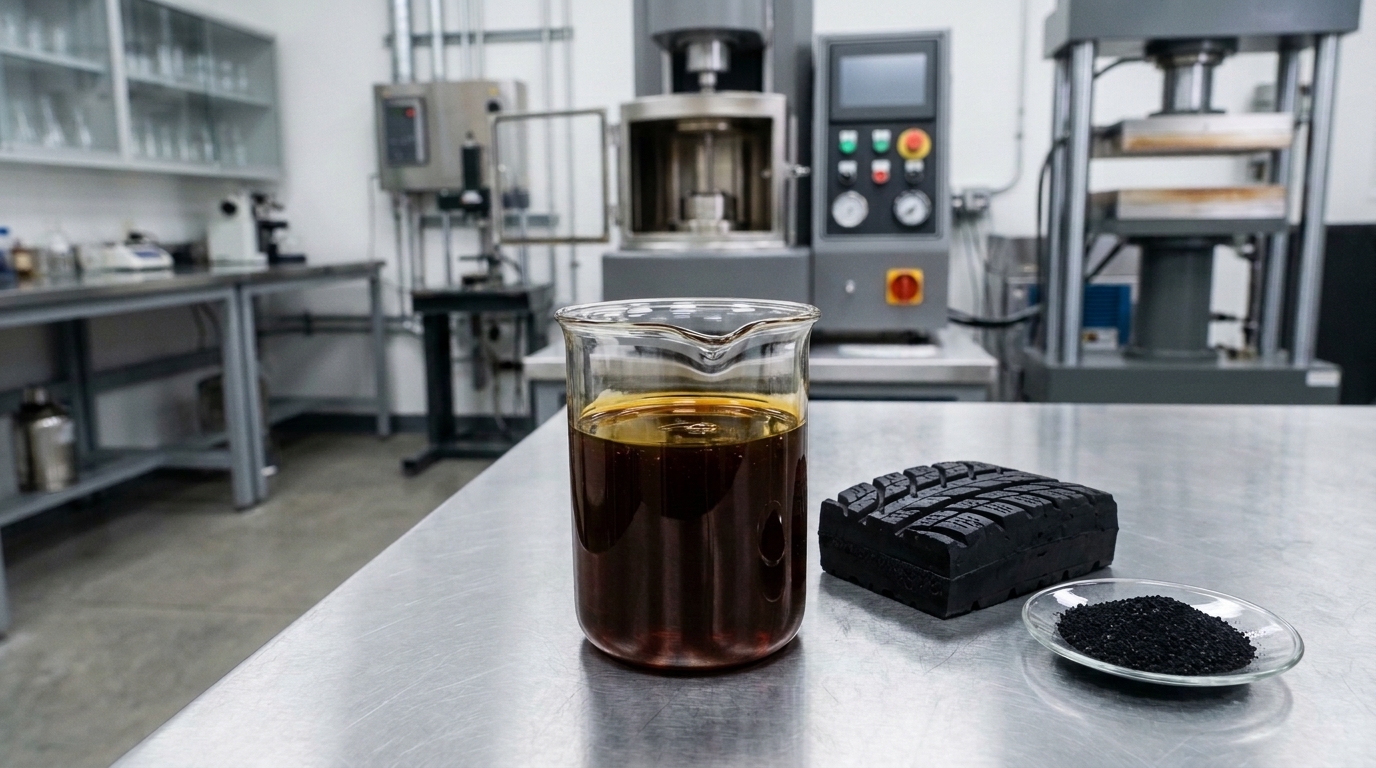
Aromatic Rubber Process Oil for tyre tread, retreading, and mechanical rubber goods. High aromatic carbon content (Ca > 30%) for outstanding compatibility with diene elastomers.

LAWS (Low Aromatic White Spirit)
Commercial sourcing and technical coordination for LAWS (Low Aromatic White Spirit). High solvency power with controlled aromatic content for coatings, inks, and industrial cleaning.
Direct Commercial Discussion
Request a Quotation for Naphthenic RPO
Share your required tonnage, packaging format, and plant delivery location. Our Vadodara sales team provides formal commercial proposals with active batch COA documentation.