

Fuel Oils
High Sulphur · Low Sulphur
Global Oil Corporation handles B2B enquiries for High Sulphur Fuel Oil and Low Sulphur Fuel Oil across India. Because acceptable sulphur limits and viscosity requirements depend on equipment and SPCB regulations, confirm your exact commercial specification during enquiry.
- 2 Fuel Classes
- High Sulphur (HSFO) & Low Sulphur (LSFO)
- Viscosity Options
- 180 cSt & 380 cSt Kinematic Grades
- ISO 8217 Standards
- Residual Marine & Industrial Specs
- Industrial Logistics
- Dedicated Road Tankers & Coastal Supply
FUEL ARCHITECTURE
High Sulphur & Low Sulphur Fuel Oils for Industrial Combustion
Industrial Fuel Oils are heavy residual hydrocarbon fractions refined for combustion in heavy industrial boilers, thermal power generation plants, metallurgical furnaces, and marine propulsion systems. Available in high-sulphur and low-sulphur formulations, they deliver high calorific heat output for energy-intensive industrial operations.
Global Oil Corporation handles structured B2B enquiries for High Sulphur Fuel Oil (HSFO) and Low Sulphur Fuel Oil (LSFO). Because permissible sulphur limits, viscosity requirements, and pre-heating configurations vary by plant authorization and regional environmental compliance, all quotations are coordinated against verified buyer specifications.

Industrial Furnaces, Boilers & Thermal Plants
Technical grade validation & batch documentation
Virgin Refinery Streams
Procured from primary refinery atmospheric and vacuum distillation units, ensuring high gross calorific energy yield.
Viscosity-Graded Options
Standard industrial supply matching 180 cSt and 380 cSt viscosity benchmarks for calibrated burner atomization.
Compliance-Aligned Sourcing
Clear classification between High Sulphur (HSFO) and environmentally regulated Low Sulphur (LSFO) fuels.
APPROVED CLASSIFICATIONS
High Sulphur & Low Sulphur Fuel Oil Formulations
Explore the two approved industrial fuel oil classifications traded by Global Oil Corporation. Confirm your plant's permitted emission parameters when requesting terms.
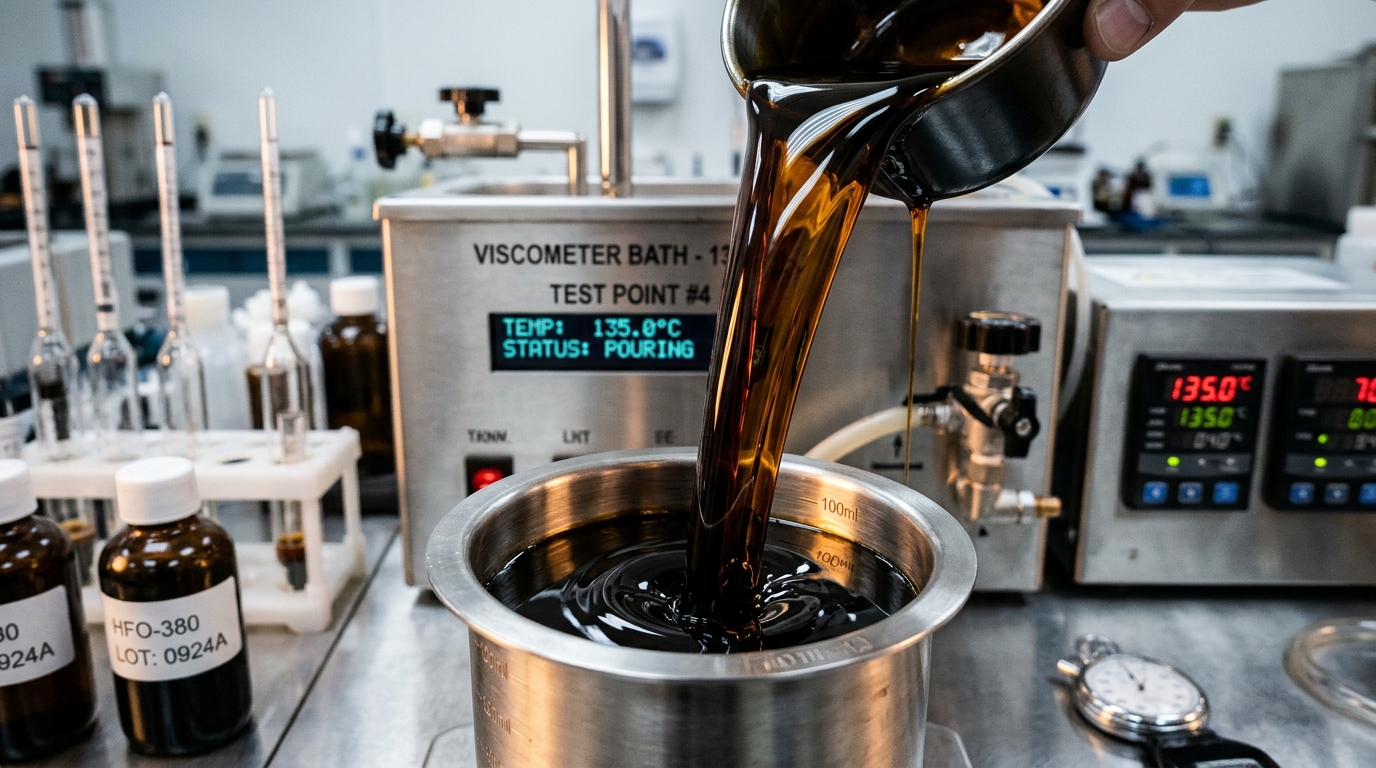
High Sulphur Fuel Oil (HSFO)
Heavy residual fuel oil designed for industrial combustion facilities permitted to operate with standard-sulphur fuel specifications. Delivers maximum gross calorific value for continuous high-temperature thermal loads.

Low Sulphur Fuel Oil (LSFO / VLSFO)
Specially hydrotreated and blended residual fuel oil refined to strict low-sulphur thresholds. Engineered for industrial installations and marine facilities operating under environmental compliance rules.
TECHNICAL BENCHMARKS
Fuel Oil Technical & Combustion Parameters
Comparative physical properties between High Sulphur and Low Sulphur fuel oil categories benchmarked against ISO 8217 and IS 1593 standards.
| Technical Parameter | High Sulphur Fuel Oil (HSFO 380) | Low Sulphur Fuel Oil (LSFO 180) | Significance |
|---|---|---|---|
|
Kinematic Viscosity @ 50°C
ISO 3104 / ASTM D445
|
≤ 380 cSt
Heavy Residual
|
≤ 180 cSt
Medium Residual
|
Determines pre-heating temperature required for optimum burner nozzle atomization |
|
Sulphur Content (% m/m)
ISO 8754 / ASTM D4294
|
Typically 2.0% – 3.5% m/m
Standard Industrial
|
≤ 0.50% or ≤ 1.0% m/m
Low Emission
|
Must align strictly with state pollution control board (SPCB) consent terms |
|
Flash Point PMCC (°C)
ISO 2719 / ASTM D93
|
≥ 66°C
Safe Storage
|
≥ 60°C
Safe Storage
|
Ensures compliance with statutory fuel oil storage and handling regulations |
|
Density @ 15°C (kg/m³)
ISO 3675 / ASTM D1298
|
≤ 991.0
Standard Heavy
|
≤ 975.0
Lighter Cut
|
Used for fuel purification, centrifuging, and volumetric billing calculations |
|
Gross Calorific Value (kcal/kg)
ASTM D240
|
≥ 9,800
High Thermal Yield
|
≥ 10,100
Very High Thermal Yield
|
Low sulphur cuts exhibit higher hydrogen-to-carbon ratio, increasing net energy |
|
Total Sediment Potential (% m/m)
ISO 10307-2
|
≤ 0.10%
Clean Dispersion
|
≤ 0.10%
Clean Dispersion
|
Prevents sludge accumulation in fuel tanks, strainers, and pre-heaters |
PROCUREMENT WORKFLOW
What Information to Share for a Fuel Oil Enquiry
Industrial fuel oil procurement requires clarity on permitted emissions, equipment viscosity limits, and unloading infrastructure. Sharing these four points ensures an accurate commercial quotation.
Specify Permitted Sulphur Limit
Confirm whether your plant is authorized for High Sulphur Fuel Oil (HSFO) or requires regulated Low Sulphur Fuel Oil (LSFO ≤ 0.50% / ≤ 1.0%).
State Required Viscosity Grade
Indicate your target kinematic viscosity at 50°C (e.g. 180 cSt or 380 cSt) based on your plant's pre-heater and burner nozzle configuration.
Request Batch COA & Approved TDS
Our Vadodara desk coordinates current refinery Certificate of Analysis (COA) confirming sulphur content, calorific value, and pour point.
Clarify Volume, Road Tanker Access & Destination
Provide your required monthly tonnage or spot volume, tank storage capacity, and plant unloading coordinates for delivered pricing.
Private Specification Review Protocol
Our technical desk coordinates industrial fuel oil consignments against your facility's environmental and combustion limits. Standards referenced for verification include:
TECHNICAL VERIFICATION & TRACEABILITY
Documentation Coordinated on Every Shipment
Industrial material qualification requires rigorous batch traceability. Every commercial consignment is backed by a verified 4-tier documentation package.
Certificate of Analysis
Refinery testing laboratory report for the loading batch detailing verified physical and chemical properties.
Technical Data Sheet
Guaranteed parameter envelope, ASTM/IS test methods, and technical processing guidelines.
Safety Data Sheet
Mandatory 16-section chemical safety dossier covering hazard classifications, exposure, and PPE.
Logistics Clearance
Complete shipping manifest, road transit permits, weighbridge slips, and customs clearance paperwork.
Industrial Fuel Oil — Parameter Verification
Typical Fuel Oil Quality Inspection Benchmark
| Parameter | Test Method | Typical Specification | Unit |
|---|---|---|---|
| Kinematic Viscosity @ 50°C | ISO 3104 | ≤ 380 | cSt |
| Sulphur Content | ISO 8754 | Per Plant Consent | % m/m |
| Flash Point (Closed Cup) | ISO 2719 | ≥ 66 | °C |
| Density @ 15°C | ISO 3675 | ≤ 991.0 | kg/m³ |
| Gross Calorific Value | ASTM D240 | ≥ 9,800 | kcal/kg |
| Water Content | ISO 3733 | ≤ 0.50 | % v/v |
Loading-Batch COA Verification: Exact parameter limits for your delivery batch are verified against original refinery release documentation and delivered on your batch Certificate of Analysis.
TECHNICAL QUESTIONS
Fuel Oils FAQs
Frequently asked specification, testing, and commercial procurement questions for this product family.
Need plant-specific technical advice?
Our Vadodara commercial and technical desk is available to discuss custom viscosity cuts, solvent formulations, or delivery scheduling.
Contact technical salesExact acceptable sulphur limits depend on applicable regional regulations and burner specifications—typically ≤ 0.5% to 1.0% m/m for Low Sulphur Fuel Oil (LSFO) versus ~2.5%–3.8% for HSFO. Share your target limit so our trading desk can confirm matching supply.
We coordinate industrial consignments aligned primarily to 180 cSt and 380 cSt kinematic viscosity profiles @ 50°C (ASTM D445 / IS 1593), depending on burner preheating capability.
Yes. Each bulk loading includes Certificate of Analysis values for Gross Calorific Value (kcal/kg via ASTM D240), sulphur % m/m (ASTM D4294), flash point (PMCC), pour point, and water & sediment.
Industrial residual fuel oils typically require bulk tank holding at 45°C–55°C for smooth suction pumping and secondary in-line burner heating to 100°C–120°C for efficient atomization.
Bulk road tanker consignments (20–30 MT payloads) are coordinated from Western India coastal terminals including Kandla, Mundra, Dahej, and Hazira to permitted industrial plants.
Specify HSFO or LSFO, maximum permitted sulphur % per SPCB consent, target viscosity at 50°C, monthly tonnage, and factory delivery pin code.
TECHNICAL BUYING GUIDES
Related Guides for Fuel Oils
How to Read a TDS and SDS Before Requesting Petroleum Products
Essential guide for industrial procurement officers navigating Certificates of Analysis (COA), Technical Data Sheets (TDS), and 16-section GHS Safety Data Sheets (SDS) for safe batch verification.
High Sulphur vs Low Sulphur Fuel Oil: Enquiry Considerations
Critical commercial and technical criteria when sourcing HSFO and LSFO for continuous industrial boilers, kilns, and bunkering—viscosity, pour points, and emission compliance.
CROSS-CATEGORY NAVIGATION
Related Product Families

Base Oils
Global Oil Corporation imports and trades Group I and Group II virgin petroleum base oils for lubricant blenders and industrial formulators across India. Share whether your requirement is Group I or Group II along with your target kinematic viscosity privately in an enquiry.

Heavy Alkyl Benzene
Heavy Alkyl Benzene (HAB) is an industrial alkylate base stock supplied across India for lubricant additive sulfonates, synthetic compressor fluids, metalworking oils, and thermal transfer applications with full batch COA and TDS documentation.

Request a quotation.
Tell us the product family, quantity, specification, and delivery location to start a focused B2B quotation discussion.